

Missing a tooth, or multiple teeth, impacts far more than just your smile. It affects how you chew your favorite meals, how clearly you speak, and the long-term structural health of your jawbone. When considering permanent, life-changing tooth restoration, modern dentistry offers one gold-standard solution above all others: dental implants. However, evaluating your treatment options often comes down to a fundamental comparison: Single vs. Multiple Implants.
At Canyon Crest Dental, located right here in Riverside, CA, our compassionate team, led by Dr. Merrihew, Dr. Brent, Dr. Nora, and Dr. Andy, is dedicated to helping our community navigate these decisions with expert, clinical clarity to achieve healthy, beautiful smiles.
Understanding the difference between a single restoration and how professionals replace multiple missing teeth helps you take charge of your oral health with confidence.
Understanding the Fundamentals of Implant Dentistry
To evaluate which option best meets your needs, it helps to understand how modern implant dentistry functions. Unlike traditional removable dentures or surface-level bridges, a dental implant acts as a true artificial root.
A biocompatible titanium post is surgically placed directly into the jawbone. Through a natural biological process called osseointegration, your jawbone tissue fuses securely with the titanium post over a period of a few months. This creates a stable anchor that preserves your facial bone structure, prevents bone loss, and supports a custom crown, bridge, or denture.
Whether you need to replace a single missing tooth or reconstruct an entire arch, the core biomechanical concept remains the same: restoring root-level support for long-lasting functionality and aesthetics.
Option 1: Single Dental Implants
When you are missing just one tooth, whether due to injury, deep decay, or a failed root canal, a single tooth replacement is the most direct and effective procedure available.
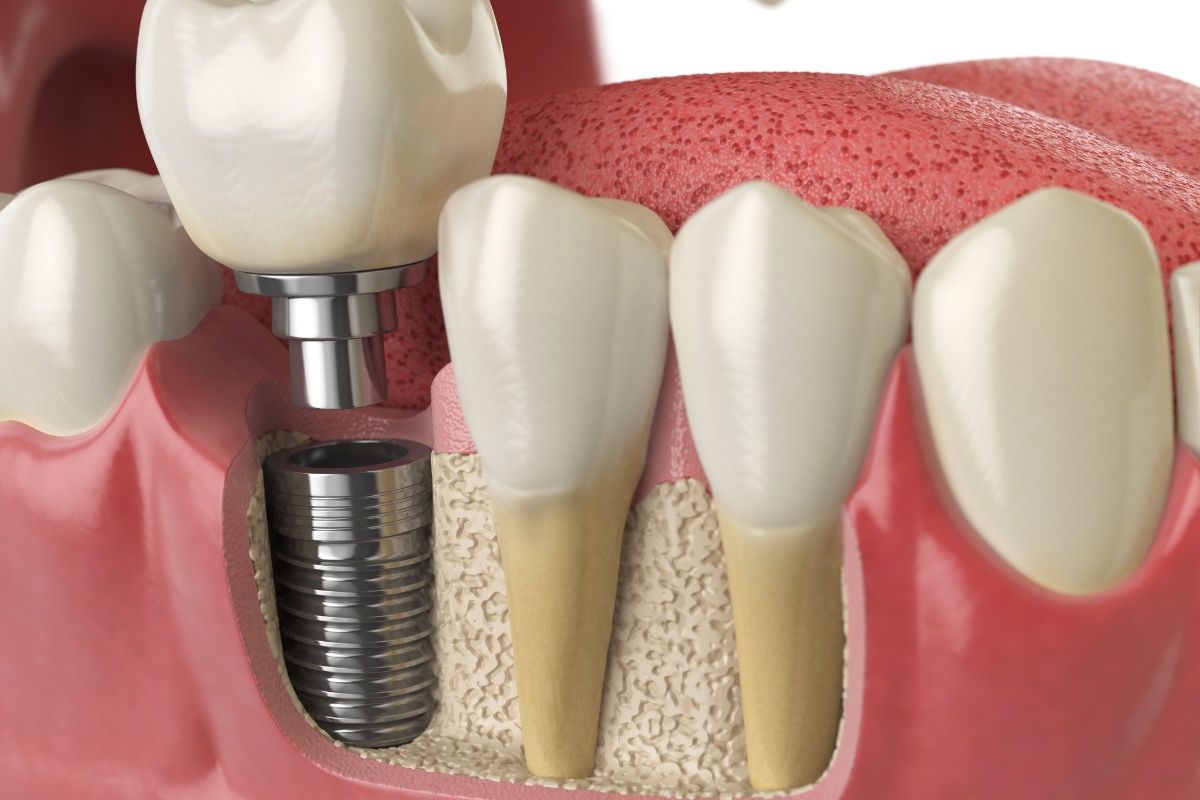
Anatomy of a Single Tooth Restoration
A single dental implant consists of three key components:
- The Implant Post: The biocompatible titanium post inserted into the jawbone.
- The Abutment: A connecting piece that sits at the gum line and holds the final restoration.
- The Dental Implant Crown: A custom-crafted, tooth-colored porcelain or zirconia crown secured to the abutment, designed to match your neighboring natural teeth seamlessly.
Primary Advantages of Single Implants
- Preservation of Adjacent Teeth: Traditional tooth-supported bridges require grinding down healthy surrounding teeth to anchor an artificial tooth (pontic). A single dental implant supports itself without disturbing nearby healthy enamel.
- Bone Health Retention: The physical stimulation of chewing transfers through the implant post into the jawbone, keeping the bone tissue dense and active.
- Natural Function & Appearance: An implant crown functions just like a natural tooth. You can eat, brush, and floss around it normally.
When weighing Single vs. Multiple Implants, patients with isolated missing teeth spaced throughout the mouth often benefit most from placing independent single implants to maintain maximum structural autonomy for each tooth.
Option 2: Replacing Multiple Missing Teeth
When two or more adjacent teeth are missing, placing individual implants for every single empty space isn’t always necessary or ideal. Thanks to advanced clinical techniques, we can strategically place fewer implant posts to support multi-tooth bridges or full-arch restorations.
Restorative Solutions for Multiple Teeth
Depending on your unique clinical evaluation and bone density, several options are available:
- Implant-Supported Bridge: If you have three or four consecutive missing teeth, an implant-supported bridge utilizes two implant posts at either end of the gap to anchor a continuous row of natural-looking porcelain crowns. This restores full chewing power without requiring a dedicated post for every missing root.
- Implant-Retained Dentures (All-on-4 / All-on-X): For patients missing a full arch of teeth, four to six strategically angled implants can permanently anchor an entire upper or lower prosthetic denture. This eliminates the slipping, sore spots, and messy adhesives associated with traditional removable dentures.
Choosing multiple dental implants in Riverside allows local patients suffering from widespread tooth loss to achieve a complete, permanent smile restoration efficiently and cost-effectively.
Key Factors That Influence Your Treatment Plan
During your clinical consultation at Canyon Crest Dental, our doctors evaluate several personal criteria to design your ideal restorative journey.
Jawbone Density and Volume
Implants require sufficient bone mass for secure integration. If bone loss has occurred due to long-term tooth absence or gum disease, bone grafting or sinus augmentation procedures can rebuild the site prior to placement.
Location and Number of Missing Teeth
Single gaps across different areas of the mouth require individual implants. Consecutive gaps, however, allow us to utilize bridges or full-arch systems to optimize surgical efficiency.
Overall Oral and Systemic Health
Healthy gums and controlled systemic health (such as managed diabetes) are crucial for successful healing and osseointegration.
Financial & Timeline Considerations
While individual single implants offer precise restoration, strategic multi-unit solutions often provide a more economical approach for replacing several missing teeth simultaneously.
Why Riverside Chooses Canyon Crest Dental for Implant Dentistry
Choosing the right dental care team is just as important as choosing the right restoration. At Canyon Crest Dental, we combine advanced 3D imaging technology, meticulous surgical skill, and a warm, patient-first environment to ensure your procedure is as smooth and comfortable as possible.
Whether you live near the UCR campus, Sycamore Canyon, or right here in the Canyon Crest neighborhood, our practice delivers personalized care tailored specifically to Riverside families. From initial 3D CT scan evaluations to gentle oral conscious sedation options, Dr. Merrihew, Dr. Brent, Dr. Nora, and Dr. Andy guide you through every step of your smile transformation.
Take the Next Step Toward Restoring Your Smile
Living with missing teeth can hinder your quality of life, but permanent restoration is well within reach. Understanding Single vs. Multiple Implants is the first step toward reclaiming a fully functional, confident smile.
Schedule your personalized consultation at Canyon Crest Dental today. Let our experienced team assess your oral health, discuss your goals, and build a custom treatment path designed just for you.
Frequently Asked Questions (FAQs)
1. How long do dental implants usually last?
With proper oral hygiene and regular dental checkups, dental implants can last a lifetime. The titanium post integrates permanently into your jawbone, though the custom crown or bridge may eventually experience natural wear after 15–20 years.
2. Is the dental implant placement procedure painful?
No. Local anesthesia ensures you feel no pain during surgery. For added comfort, Canyon Crest Dental offers oral conscious sedation. Most patients experience only mild, manageable soreness for a few days post-procedure.
3. Am I a good candidate for dental implants if I have bone loss?
Yes. Even if you have experienced jawbone loss, bone grafting procedures can rebuild the necessary volume and density, creating a stable foundation to safely support single or multiple dental implants.
4. How long does the complete dental implant process take?
The entire process typically spans 3 to 6 months. This timeline allows sufficient time for the titanium implant post to fully fuse with your jawbone before attaching the permanent crown or bridge.
5. How do I clean and care for dental implants?
Single dental implants: brush and floss just like natural teeth. For implant bridges or full arches, special floss threaders, interdental brushes, or water flossers help keep the gumline clean and free of plaque bacteria.
6. What is the success rate of dental implant procedures?
Modern dental implants boast an exceptionally high success rate of 95% to 98%. Maintaining good oral hygiene, avoiding tobacco, and attending routine professional cleanings ensure long-term implant stability and success.
7. How do I know if I need a single implant or a bridge?
If you are missing one tooth, a single implant is best. If you have multiple adjacent missing teeth, an implant-supported bridge provides an efficient, cost-effective solution without placing individual posts for every single tooth.


