

Dental implants can restore much more than the appearance of a missing tooth. They can help improve chewing, support comfortable speech, and provide a stable foundation for replacement teeth. Although implants are designed for durability, their long-term health still depends on what happens every day at home.
A dental implant cannot develop a cavity like a natural tooth, but the gums and bone surrounding it remain vulnerable to plaque-related inflammation. This makes consistent oral hygiene and routine dental visits essential. Understanding how to clean dental implants correctly can help protect the tissues supporting your restoration and identify potential concerns before they become more difficult to manage.
At Canyon Crest Dental, we help Riverside patients understand the role daily care plays in maintaining their restored smiles. Our dentists, Dr. Merrihew, Dr. Brent, Dr. Nora, and Dr. Andy, emphasize patient education and ongoing preventive care as important parts of protecting oral health after implant treatment.
Why Do Implants Need Daily Care?
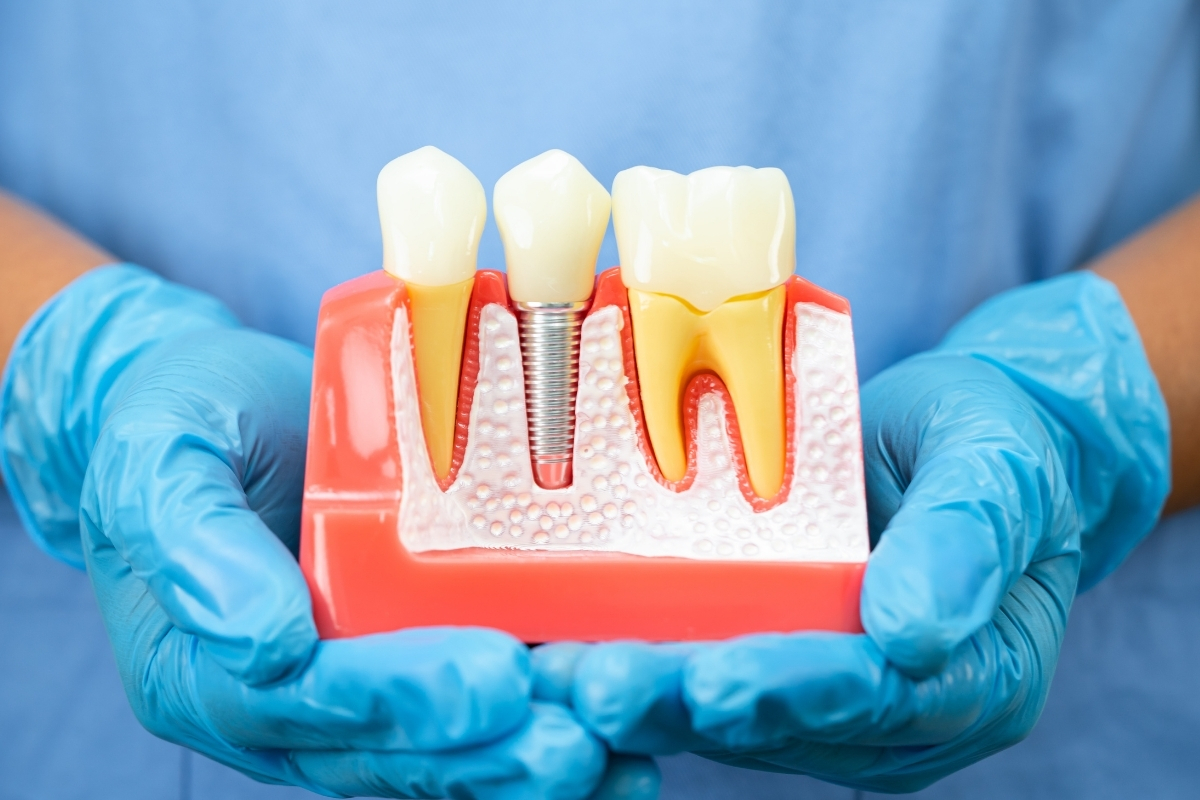
Implants are placed into the jawbone, where they can integrate with the surrounding bone and create a stable base for a crown or other restoration. Depending on a patient’s needs, implants may replace one tooth or help support a bridge or denture.
However, the implant itself is only one part of the restoration. Healthy gum tissue and supporting bone are equally important.
Plaque can accumulate where the restoration meets the gumline. If plaque remains in these areas, the surrounding tissues may become inflamed. Early inflammation around an implant is commonly called peri-implant mucositis. If the condition progresses and supporting bone becomes affected, it may develop into peri-implantitis.
Consistent implant maintenance therefore focuses not only on keeping the replacement tooth looking clean but also on protecting the gums and bone around the implant.
How to Maintain Your Implanted Tooth
Your exact cleaning routine can vary depending on whether you have a single implant crown, an implant-supported bridge, or a full-arch restoration. Your dentist or dental hygienist can show you which tools are appropriate for your restoration.
For many patients, daily care includes the following steps.
Brush at Least Twice a Day
Brush your teeth in the morning and before bed. Pay close attention to the gumline around the implant restoration, where plaque and food debris can collect.
A soft-bristled manual or electric toothbrush may be used based on your dentist’s recommendations. Avoid aggressive scrubbing. Gentle, controlled brushing can remove plaque without unnecessarily irritating the gums.
When brushing dental implants, clean all accessible surfaces of the restoration as well as the neighboring natural teeth.
Clean Between Your Teeth Daily
A toothbrush cannot effectively reach every area between teeth or beneath certain implant restorations. Daily interdental cleaning helps remove plaque from these harder-to-reach spaces.
Depending on the design of your restoration, your dental team may recommend:
- Dental floss
- Implant-specific or threader floss
- Interdental brushes
- A water flosser
- Other cleaning aids designed for your restoration
Use these products carefully around the gumline. If you are uncertain about technique, ask your dental hygienist to demonstrate it during your next appointment.
Pay Attention to the Gumline
The gumline deserves particular attention because inflammation often begins in the tissues surrounding an implant.
When learning how to clean dental implants, think beyond the visible crown. Your goal is to disrupt plaque where the implant-supported restoration meets the gum tissue and in any spaces underneath the restoration that your toothbrush cannot reach.
Healthy tissues should generally remain comfortable and should not routinely bleed during normal cleaning. Persistent bleeding, swelling, tenderness, or changes around an implant warrant a dental evaluation.
How Do You Clean Under Implant-Supported Teeth?
Cleaning beneath an implant-supported bridge or full-arch restoration requires a slightly different technique because food particles and plaque can accumulate underneath the prosthesis.
Depending on the amount of space available, patients may use floss threaders, specially designed floss, interdental brushes, or a water flosser.
With a water flosser, direct the stream toward the spaces beneath the restoration and around implant sites using the setting recommended by your dental professional. The goal is to flush debris from areas that conventional brushing cannot adequately access.
For caring for implant-supported teeth, technique matters as much as frequency. Ask your dental team to demonstrate how to clean around your particular restoration instead of assuming that one cleaning method works for every implant patient.
Habits That Can Help Protect Implants
Cleaning is only one part of implant care. Everyday behaviors can also influence the health of your restoration and surrounding tissues.
Avoid Using Your Teeth as Tools
Do not use implant crowns or natural teeth to open packages, tear plastic, crack shells, or bite other hard objects. These habits can place unnecessary pressure on crowns and other restorative components.
Be Careful With Very Hard Foods
Implants are designed to restore chewing function, but restorations are not indestructible. Chewing ice, hard candy, popcorn kernels, or similarly hard objects can potentially chip or damage a crown.
Address Teeth Grinding
Grinding or clenching can place significant forces on both natural teeth and implant restorations. If you grind your teeth while sleeping, your dentist may evaluate whether a nightguard or another approach is appropriate.
Avoid Tobacco
Smoking and other tobacco use can negatively affect oral tissues and may interfere with the health of the gums and bone supporting implants. Patients considering implant treatment should discuss tobacco use with their dentist.
Why Professional Dental Visits Still Matter
Home care is essential, but it cannot replace professional dental examinations and cleanings.
During routine visits, your dental team can examine the implant restoration, surrounding gum tissue, bite, and other areas of your mouth. Professional cleaning also allows plaque and hardened deposits to be removed from areas that may be difficult to maintain at home.
Your dentist may recommend dental X-rays when appropriate to assess the bone surrounding an implant.
The appropriate recall schedule depends on your oral health, periodontal history, number and type of implants, home-care effectiveness, and other individual factors.
What Are the Warning Signs of an Implant Problem?
An implant should not be ignored simply because it does not hurt. Some problems affecting the tissues around implants can begin with relatively subtle symptoms.
Contact your dentist if you notice:
- Persistent bleeding around an implant
- Red or swollen gums
- Increasing tenderness
- Pus or drainage near the implant
- Persistent unpleasant taste or odor
- Difficulty chewing around the restoration
- A crown or restoration that feels loose
- Changes in the way your teeth meet
- Gum recession around the implant
- Any sensation that the implant itself is moving
Early evaluation gives your dentist an opportunity to determine whether the issue involves the restoration, gum tissue, supporting bone, bite, or another part of the implant system.
Can Implants Last a Lifetime?
Implants are considered a long-term tooth replacement option. Canyon Crest Dental notes that properly cared-for implants may last a lifetime, although longevity varies according to oral hygiene, health, lifestyle, and other individual factors. The crown, bridge, or other restoration attached to an implant may have different maintenance or replacement needs over time.
This is why understanding how to clean dental implants is valuable even years after treatment. Daily plaque control, healthy habits, and professional monitoring work together to protect the supporting tissues and help maintain comfortable function.
Protect Your Implanted Tooth With Consistent Care
A successful dental implant deserves consistent care. Brush twice daily, clean between and underneath implant restorations, avoid habits that can damage replacement teeth, and keep your recommended dental appointments.
If you have questions about cleaning an existing implant or are concerned about changes around an implant restoration, schedule an appointment with Canyon Crest Dental in Riverside, CA. A professional evaluation can help determine what your implant and surrounding tissues need to stay healthy over the long term.
Frequently Asked Questions
1. Do dental implants need to be cleaned differently from natural teeth?
Implants need daily brushing and cleaning between teeth, but certain restorations require additional tools. Floss threaders, interdental brushes, or water flossers may help reach areas beneath implant bridges that ordinary toothbrushes cannot effectively clean.
2. What type of toothbrush should I use with dental implants?
A soft-bristled manual or electric toothbrush can usually clean implant restorations effectively without aggressive scrubbing. Focus carefully along the gumline and all accessible restoration surfaces. Ask your dentist which brush design suits your restoration specifically.
3. Can I use a water flosser around dental implants?
A water flosser can help remove food and plaque from spaces around implants and beneath certain implant-supported restorations. Your dental team can demonstrate the correct tip, pressure setting, angle, and technique for your individual restoration.
4. How often should dental implants be professionally cleaned?
Professional cleaning frequency depends on gum health, plaque accumulation, periodontal history, implant design, and overall oral health. Your dentist may recommend a personalized recall interval rather than using the same cleaning schedule for every implant patient.
5. Can food get trapped underneath a dental implant?
Food can collect around implant crowns or beneath bridges and full-arch restorations. Daily interdental cleaning helps remove trapped debris. Persistent food trapping should be evaluated because restoration contours, gum changes, or contact areas may contribute.
6. What happens if I do not clean around my dental implant?
Plaque accumulation can irritate tissues surrounding an implant and contribute to inflammation. Without appropriate care, disease may eventually affect supporting structures. Consistent home cleaning and professional monitoring help reduce these preventable oral health risks.
7. How can I tell whether my dental implant is healthy?
Healthy implants should feel stable and function comfortably. Watch for persistent bleeding, swelling, tenderness, drainage, recession, unusual taste, or looseness. Report changes promptly so your dentist can evaluate the implant, restoration, gums, and supporting bone.


